Pricing your app
What families pay for apps like yours, and what we’d charge.
You told Janet I'm not set on the pricing.
So we checked what every comparable app charges, read the subscription data for health apps, and worked out what it takes to reach $200K a year.
This is our recommendation, and the decision is yours
| App | Monthly | Annual | Family | Gets your records for you |
|---|
| Caring Villagefamily care hub | $14.99 to $24.99 | $149.99 to $249.99 | Up to 50 members on the top plan | No, you upload |
|---|
| Primary Recordfamily health record | $16 | $156 | A profile per family member | Portal sync, you log in to each portal |
|---|
| Guava Healthpersonal health record | Free, Premium $8 | $78 | Family plan, price not published | Portal sync, on the free tier |
|---|
| Undividednavigation for kids with disabilities | $19 | $149 | Household | No, you upload |
|---|
| MedFiles.airecords vault | $2.99, family $4.99 | $29.90, family $49.90 | Up to 10 profiles | No, it scans your email and drives |
|---|
| PicnicHealthdone-for-you records | Not offered | $499, one person | No family plan | Yes, they collect them |
|---|
| Vivid Vault, as plannedfrom the call | $24.99, family $49.99 | None yet | Up to 4, then $9.99 each; $4.99 view only | From January, through HealthX |
|---|
Prices read from each app’s pricing page or App Store listing on November 10, 2026.
The market sits at $5 to $25 a month.
And $30 to $250 a year. The top family tier in the set is Caring Village at $24.99 a month. Your family plan at $49.99 is twice that.
Getting the records is what earns $49.99.
The only app near your price is the only one that fetches records for you: PicnicHealth, $499 a year for one person. HealthX import for a family of four is what holds your price up. Without it, Primary Record at $16 wins.
Most apps let family in for free.
Caring Village, Primary Record and Medisafe all let family members in at no extra charge. Nobody in the set charges a monthly fee for a view-only seat. Annual plans run 17% to 35% below 12 months of monthly.
What we’d charge
Keep the family price, add annual plans, cut the individual price and make caregiver seats free. Lead every ad and every paywall with annual Family, shown per person.
| Plan | Monthly | Annual | Annual works out to |
|---|
| Familyup to 4 people | $49.99 (keep) | $399 | $8.31 per person a month, 33% off monthly |
|---|
| Individualdon’t advertise it | $19.99 (down from $24.99) | $149 | $12.42 a month |
|---|
| Each member from the 5th | $9.99 (keep) | $79 | $6.58 a month |
|---|
| View-only caregiver | Free. Unlimited on Family, 2 on Individual. |
|---|
| Founding Familyfirst 300, January only | | $299, locked for as long as it renews | $6.23 per person a month |
|---|
1
Sell annual Family, shown per person.
$399 a year is $8.31 per person a month, about what Guava Premium costs for one person, with records for four. $49.99 monthly stays as the anchor. Mateen’s right about annual: a monthly family brings in about $302 in its first year once you count cancellations, and an annual family pays $399 up front.
2
Cut Individual to $19.99 and keep it quiet.
At $24.99 it’s three times Guava Premium for one person. At $149 a year, two people on Individual cost $298 and Family covers four for $399, so anyone adding a second person picks Family.
3
Make the caregiver seat free.
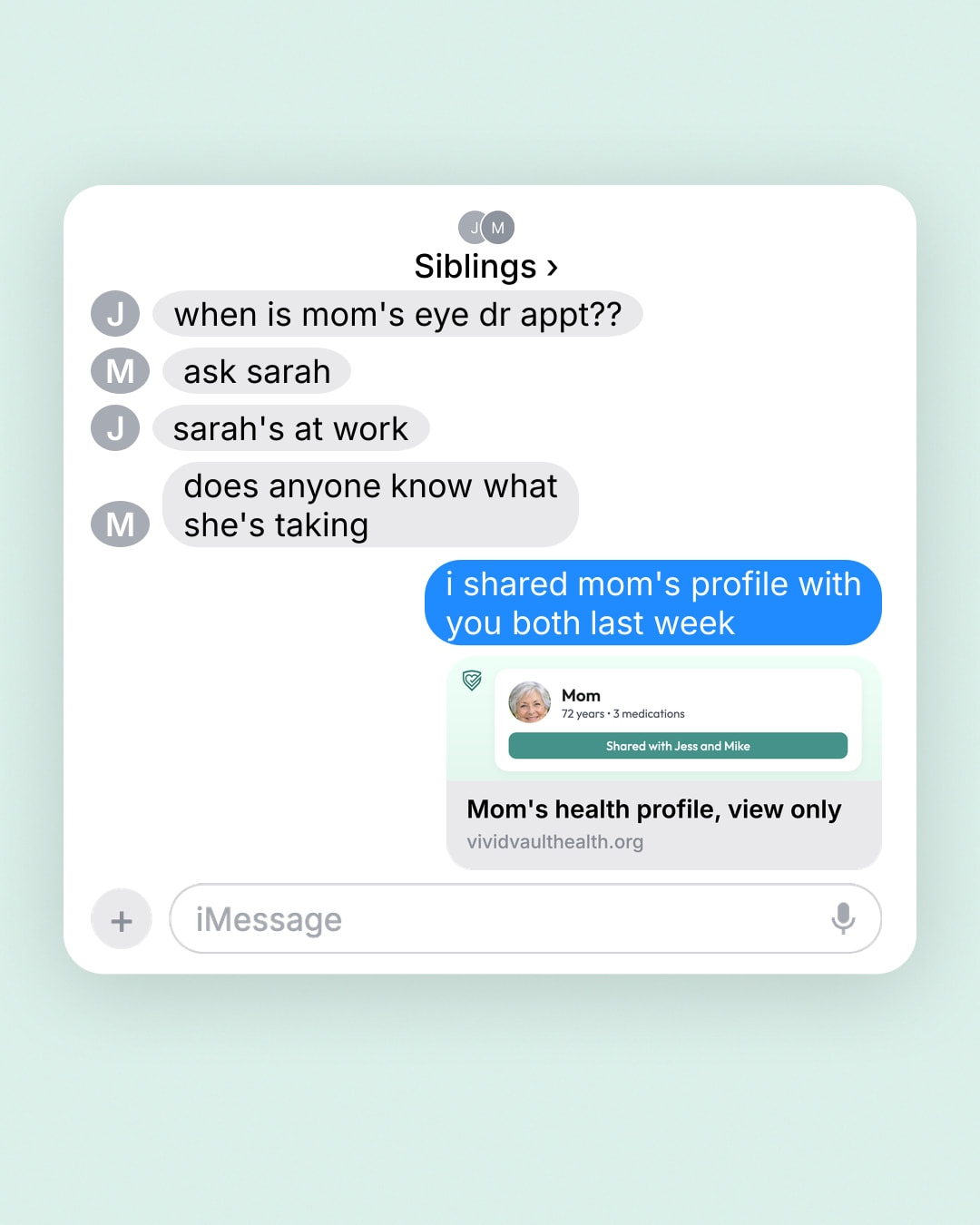
No competitor charges for it, and at $4.99 it would bring in under 4% of revenue. Every sibling who sees Mom’s reminders inside Vivid Vault is a warm lead for their own family plan. It also gives people a reason to trust the app with who sees what.
4
A 14-day free trial on annual, then pay.
RevenueCat’s 2026 report: apps that ask for payment after a trial turn 10.7% of downloads into paying users by day 35, against 2.1% for apps with a free tier, with about the same retention a year later. With five months of runway, 14 days gets cash in sooner than 30.
The founding-family offer, January only
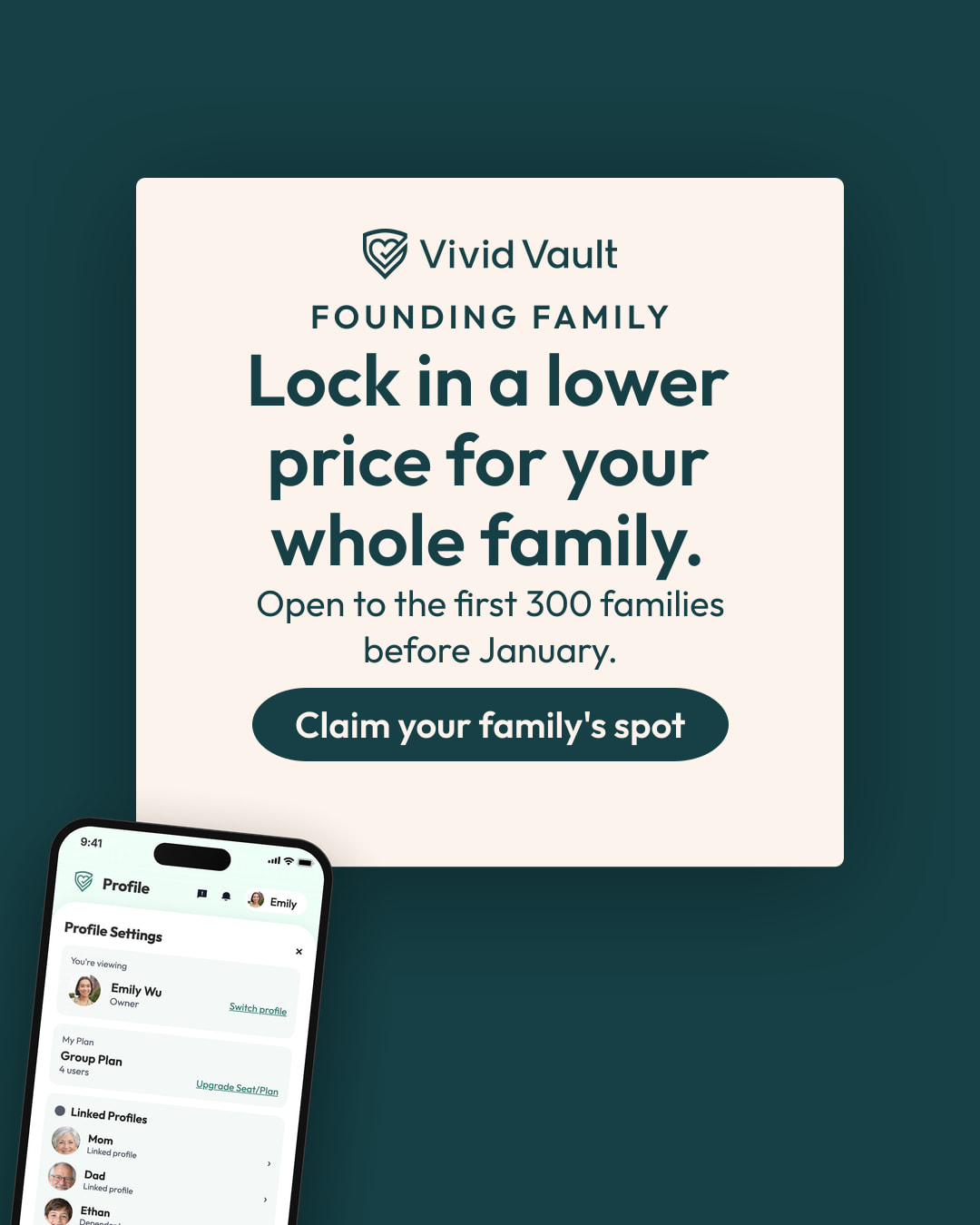
300 × $299a year
If all 300 spots fill, that’s $89,700 before Apple’s cut, about $76,245 after its 15%, collected in January. That’s about 38% of the year’s target before anyone has had a chance to cancel.
- Build the list in December with no ad spend, then open it the day HealthX import goes live. Janet floated founding members on the call:
we can make it something that seems exclusive.
- $299 a year, locked for as long as the family renews, unlimited free caregivers and a Founding Family badge in the app.
- Capped at 300 so the locked rate stays a small share of revenue later. You set the number.
- One thing to square up: your App Store promo text says “Free through December 2026 for our first 100 members.” The two offers shouldn’t contradict each other.
What would break this: if HealthX import slips past January, or works for only some providers, $49.99 and $399 don’t hold against Primary Record at $16 a month. Then we’d price Family at $24.99 a month or $199 a year until import is live, and hold the founding offer until it is.
The math to $200K a year
We’ve read $200K as money in your bank after Apple’s 15%, so the target is $235,294 in sales during 2027. Three ways to get there. Each shows how many new paying families (or individuals) have to join every month from January to December.
A · Our prices
Recommended prices, most people pick annual
73new paying accounts a month
- Paying accounts in 2027
- 876
- Installs a month
- about 2,520
- Collected by Dec 31
- $200,804 net
- On annual plans at year end
- 569
70% Family, 30% Individual, 65% on annual (the usual share for health apps).
B · Your current prices
$24.99 and $49.99, monthly only
123new paying accounts a month
- Paying accounts in 2027
- 1,476
- Installs a month
- about 4,240
- Collected by Dec 31
- $201,428 net
- On annual plans at year end
- 0
Half Family, half Individual, $4.99 caregiver seats on. Monthly subscribers cancel faster, so it takes 68% more families than A.
C · Our prices + 300 founders
Founding families first, weaker uptake after
56new paying accounts a month, plus 300 in January
- Paying accounts in 2027
- 972
- Installs a month
- about 1,930
- Collected by Dec 31
- $200,438 net
- On annual plans at year end
- 602
60% Family, 40% Individual, only 45% on annual, and more monthly cancellations than A. The founders bring a third of the year’s cash in month one.
~35installs per paying account
The median health app turns 2.9% of installs into paying users. So if an install costs $3, a paying account costs about $103. Janet’s target on the call, about $25 per paying user, needs installs well under $1 or a funnel converting in the top quarter of health apps. We don’t know your install cost yet. We’ll have a real number within 72 hours of January spend.
Month 1payback on annual
Annual matters for the ads too. A family on annual pays $399 the day it joins, so even a $100 to $170 cost per paying family pays back in the first month. A monthly family takes three or four months to pay back the same cost.
How we worked it out: monthly subscribers cancel at the rate in RevenueCat’s State of Subscription Apps 2025 (17% of monthly subscribers still paying after a year). Families join at the same pace every month of 2027, and trial weeks aren’t counted. The share of installs that become paying users (2.9%) and of free trials that become paying (37.7%) are RevenueCat’s 2026 medians for health and fitness apps. Apple’s cut is 15% under its Small Business Program. About 44% of annual subscribers renew after a year, so $200K has to be earned again in 2028. Paying through the web instead of Apple would cut the fee, but we haven’t counted that here.
 .
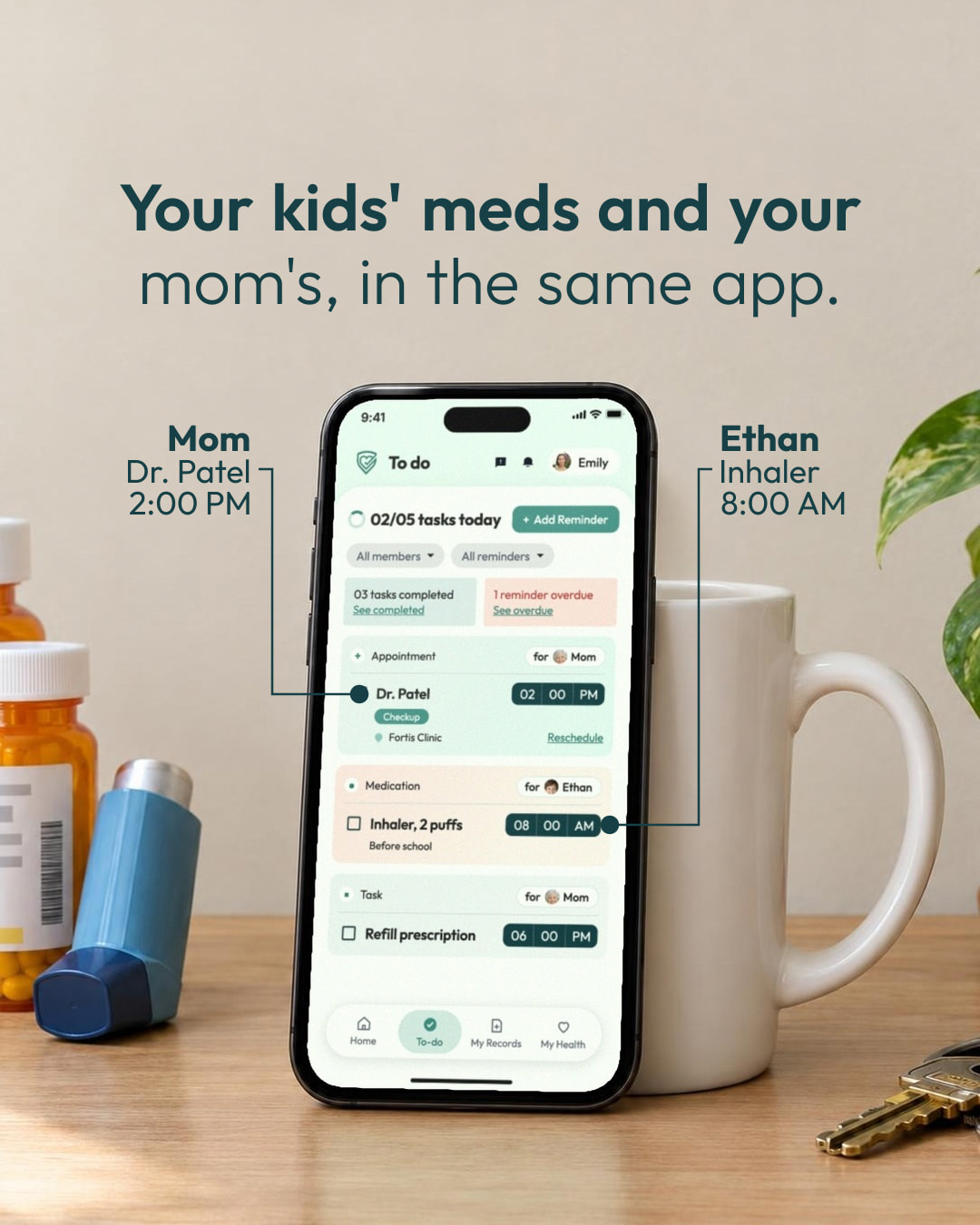
 02Your kids’ meds and your mom’s, in the same app.
 03i shared mom’s profile with you both last week
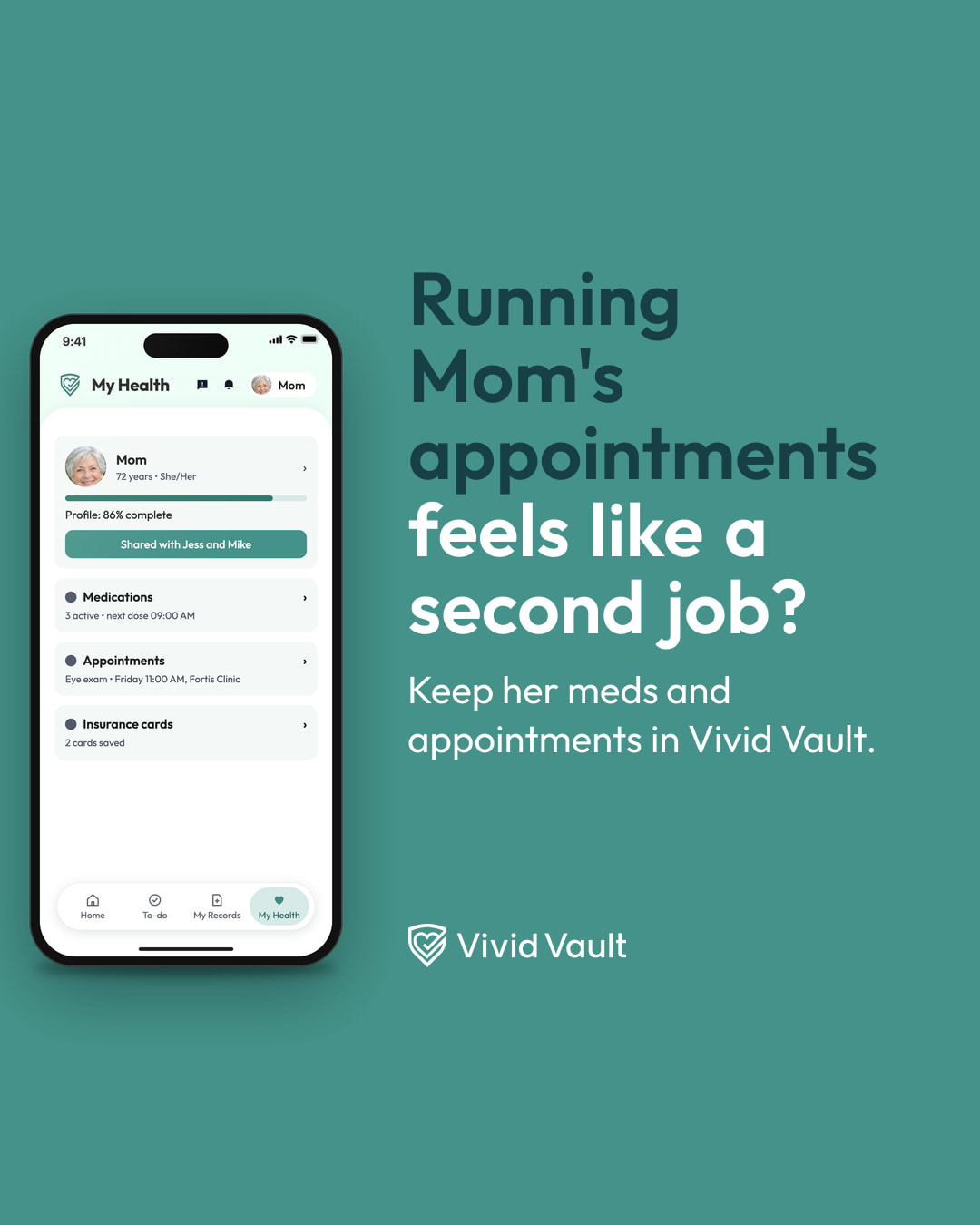
 05Running Mom’s appointments feels like a second job?
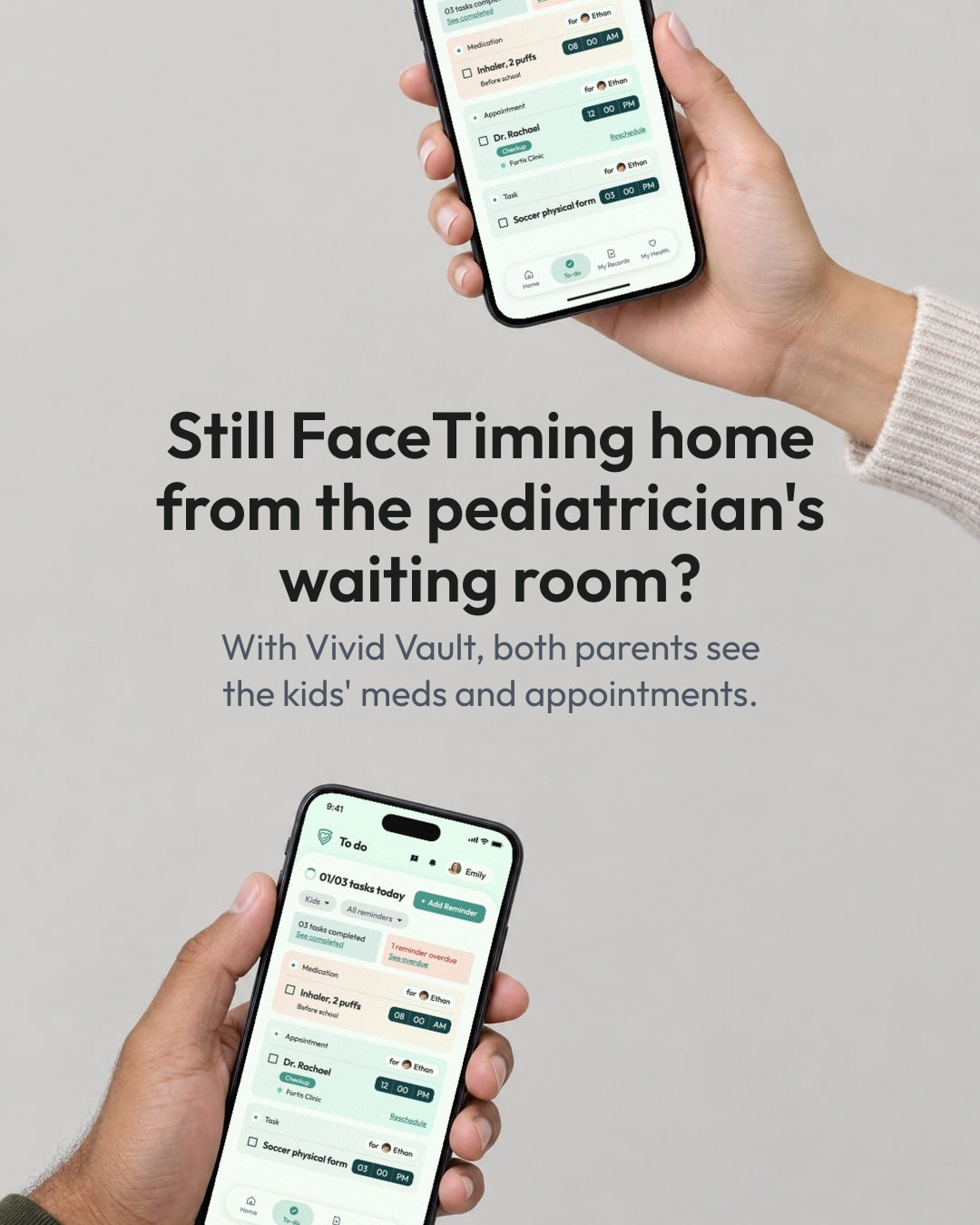
 09Still FaceTiming home from the pediatrician’s waiting room?
 12Lock in a lower price for your whole family.